Rebrand Merch Rollout: A Blueprint for Every Office and Country
A blueprint for a rebrand merch rollout that hits every office on launch day: inventory the old, produce on one schedule, ship it all to land together.
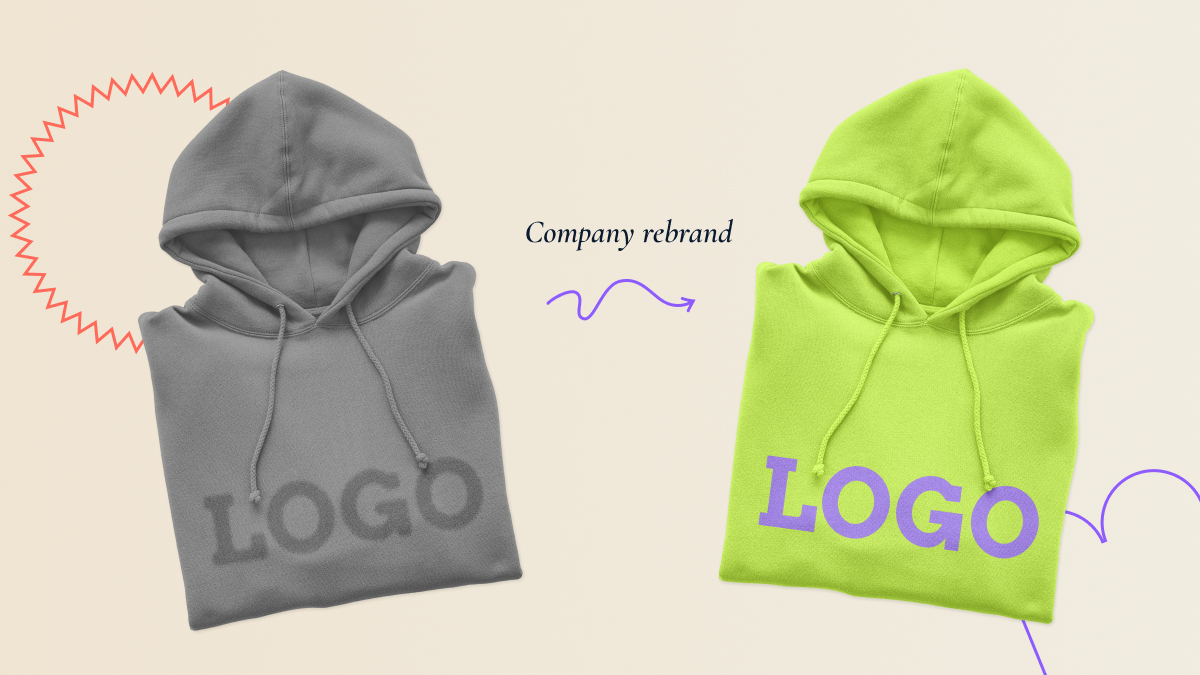
The new logo is signed off. The launch date is set. Marketing is deep in the website, the deck, and the announcement, and rightly so, because that is the visible half of a rebrand. The other half is sitting in cupboards and on people in every office you have: the apparel, the drinkware, the desk items, the event stock, all still carrying the old mark. The day the new identity goes live, every one of those becomes something you are now trying to replace.
Changing the logo is a design decision made once. Changing everything the logo is printed on is a production and logistics operation that has to hit a hard date, across locations, all at the same time. And unlike a website, there is no soft launch for physical goods: on the morning of the announcement, the old items are visibly wrong. This is a blueprint for landing that morning cleanly.
The short version: treat the rebrand merch rollout as one coordinated production-and-distribution moment, not a stack of separate orders that share a deadline. Inventory everything carrying the old mark, produce the full refresh on one schedule, and ship it to land at every office and every home on or before launch day.
Why the physical rollout is harder than the logo
A rebrand merch rollout breaks the usual process in a few specific ways, and they compound.
It is not one item, it is the whole inventory at once. A typical order is a run of one or two things. A rebrand touches the full range simultaneously: apparel, bottles, notebooks, tech items, reception and event stock. Each is a different production process, so a rollout is really several production jobs that have to finish together.
It has a fixed, immovable date. The refresh doesn't need to arrive soon, it needs to arrive before the launch, everywhere. A run that slips a week means an office handing out the old identity at the exact moment the company announces the new one.
It is distributed by default. Every office needs the refreshed items, and so does every remote employee, ideally landing on the same day. So a rollout isn't one delivery to one warehouse; it is a coordinated set of shipments to many locations and many homes, timed to a single moment. And if the items are made by a supplier who subcontracts production, the one date everything must hit now depends on several subcontractor queues you can't see, running in parallel.
The blueprint: how to run a rebrand merch rollout
Six steps make launch morning a non-event.
- Inventory everything carrying the old mark. Walk every location, on paper: apparel, drinkware, desk items, reception and event stock, whatever else wears the logo. You can't replace what you haven't listed.
- Lock the launch date as the deadline for all of it. One date, and everything is measured against it. This is what turns a pile of orders into a single coordinated run.
- Produce the full refresh on one schedule. Make the whole range together, in one place, so the different item types are stages in a single plan rather than separate bookings you're trying to synchronise. This is the step that makes the date realistic.
- Proof the new logo once, then reproduce it consistently. A rebrand is exactly when logo consistency matters most, because everything is remade at once and any drift is on display everywhere. Photo proofs before dispatch keep the mark identical on a hoodie in one country and a bottle in another.
- Kit per location and ship to land together. Group the items for each office and each remote person, then send them to arrive on or before launch, so the rollout happens as one event rather than trickling in over a fortnight.
- Hold the surplus for what comes after. New hires join the week after, and events keep happening. Producing a little ahead and holding it means you slide straight into an ongoing stock instead of reprinting the whole range in three weeks.
Where SoMerch fits
SoMerch runs the refresh as one operation rather than many. Production and decoration happen in-house across a real range of methods, so the apparel, drinkware, and tech items are stages in a single schedule SoMerch controls, not separate subcontractor queues you're aligning to one date. The new logo runs through tiered quality checks with photo proofs before dispatch, so it reproduces the same way across every item and location. Multi-address delivery across Europe is the default, so the refreshed items reach every office and every remote employee timed to the launch. And because the same operation produces, stores, and ships, surplus from the rollout is held in warehousing, free for up to six months, so the rebrand flows into an ongoing stock that covers later hires and events without another full run. The whole thing, timelines, proofs, and destinations, sits on one shareable view.
Launch-day checklist
Before the announcement, confirm:
- The inventory is complete - every item carrying the old mark is on the list.
- One date governs everything - no item is on a separate timeline.
- The refresh is on one production schedule - not several bookings hoping to align.
- Every location and remote hire has a shipment - timed to land on or before launch.
- Surplus has a home - held for the hires and events that follow.
A rebrand merch rollout is judged on one morning: whether the new identity is everywhere it should be, and the old one isn't. Produce the full refresh on one schedule, reproduce the mark consistently, and ship it to land together, and that morning becomes a non-event, which is exactly what you want it to be.