Onboarding Packs: Built for a Group, Not a Single Photo

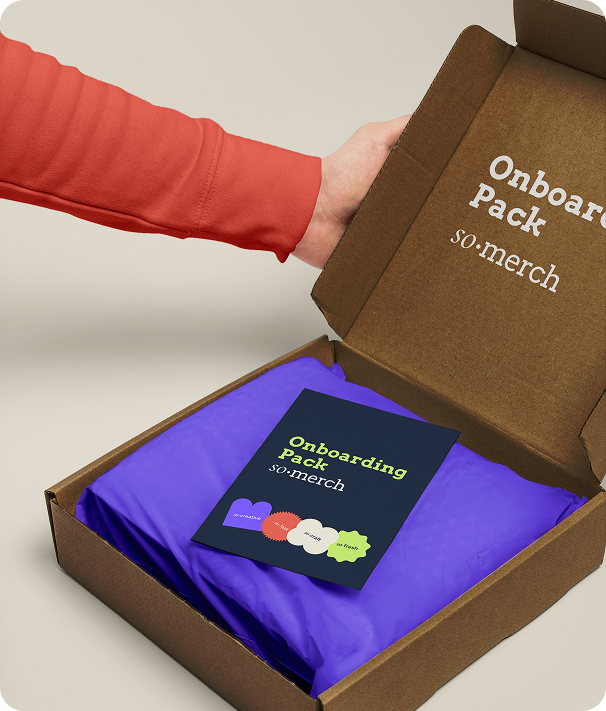
Putting together an onboarding pack looks like the easy part of a new hire's first week - a hoodie, a notebook, a mug, maybe a card, done in an afternoon. What's harder to see up front is that one set of choices, made once, has to work for every new hire who opens that box afterward, not just the one person pictured in someone's head while making the selection.
This piece is about what actually belongs in the box. The process of running onboarding packs as an ongoing operation - stakeholder sign-off, stock management, reorders - is covered in more depth in a separate piece, linked further down for anyone who needs that side of it.
A pack is chosen once, used by everyone after
Onboarding packs get selected once and then used, unchanged, by a genuinely wide range of new hires over time - different roles, different working styles, sometimes different climates if the company hires across countries. That range is easy to forget while picking items, because the person choosing usually has one type of new hire in mind, not the full spread of people who'll eventually receive the same box.
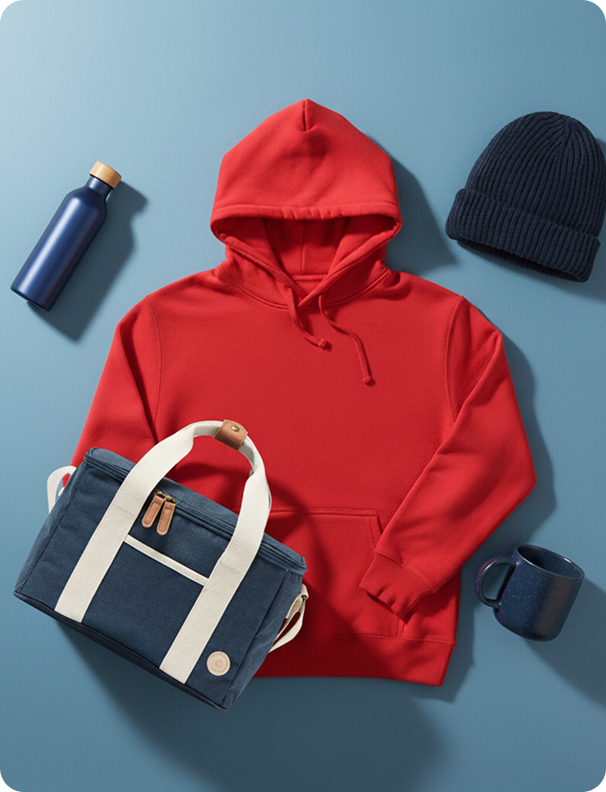
Most onboarding packs get built around what looks good in a single flat-lay photo - the kind of image that sells well internally when a few options are being compared. But the photo test and the "will this actually get used" test are not the same test, and a pack that passes the first one doesn't automatically pass the second.
Where it actually breaks down
An item that reads as universal in the planning stage often actually skews toward one type of role or person without anyone noticing. A fitted hoodie photographs well and works fine for an office-based team, but lands differently for someone in a warehouse or field role who wouldn't wear it day to day. The same pack, unchanged, doesn't serve both groups equally well - it just looks like it does from a single sample photo.
A missing sizing plan turns apparel into a reorder scramble the moment the actual range of new hires doesn't match whatever size assumption the original pack was built around. And a pack designed around one climate or working style - built and photographed for an office-based, temperate-climate team - often ships unchanged to a remote hire in a different country or a genuinely different kind of role, with nobody revisiting whether it still makes sense there.
Take a fairly ordinary case: an onboarding pack built and photographed around a company's original office-based team. It looks good, everyone signs off, and it becomes the standard pack. A year later, half of new hires are distributed, working from home in a different climate, in roles that don't resemble the original photo shoot. The pack still ships. Usage quietly tells the real story - some items get used daily, others sit in a drawer, and nobody planned for that gap because nobody revisited the pack once it was approved.
Why this is a design-for-range problem, not a taste problem
Nobody responsible for choosing onboarding pack items has bad taste. The individual items are almost always fine on their own - reasonable, well-made, the kind of thing that photographs and sounds good in a planning meeting.
What tends to get skipped is designing the set for the real range of people who'll receive it, not for the one hypothetical new hire pictured while making the choice. The failure isn't visible at launch - it shows up months in, quietly, in what actually gets worn, used, or left untouched, long after the pack was already signed off and locked in.
What actually makes a pack work broadly
The fix isn't more items in the box. It's the right handful of choices that genuinely work across different roles, climates, and working styles, instead of one narrow assumption stretched to cover everyone.
Building in size and variant flexibility from the start avoids discovering the gap at the first reorder, when it's already too late to adjust the pack that's already been approved and communicated internally. And treating the pack as a living selection - revisited as the makeup of new hires actually changes - avoids the trap of a fixed choice made once, in one meeting, and left untouched for years while the workforce it serves keeps changing underneath it.
How SoMerch fits
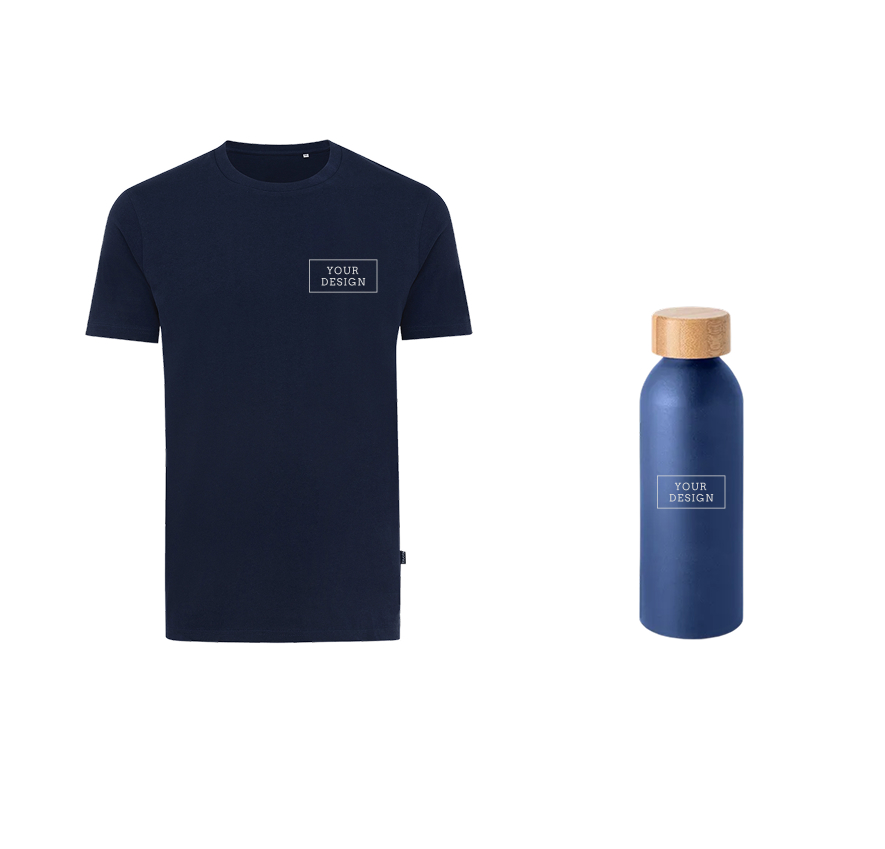
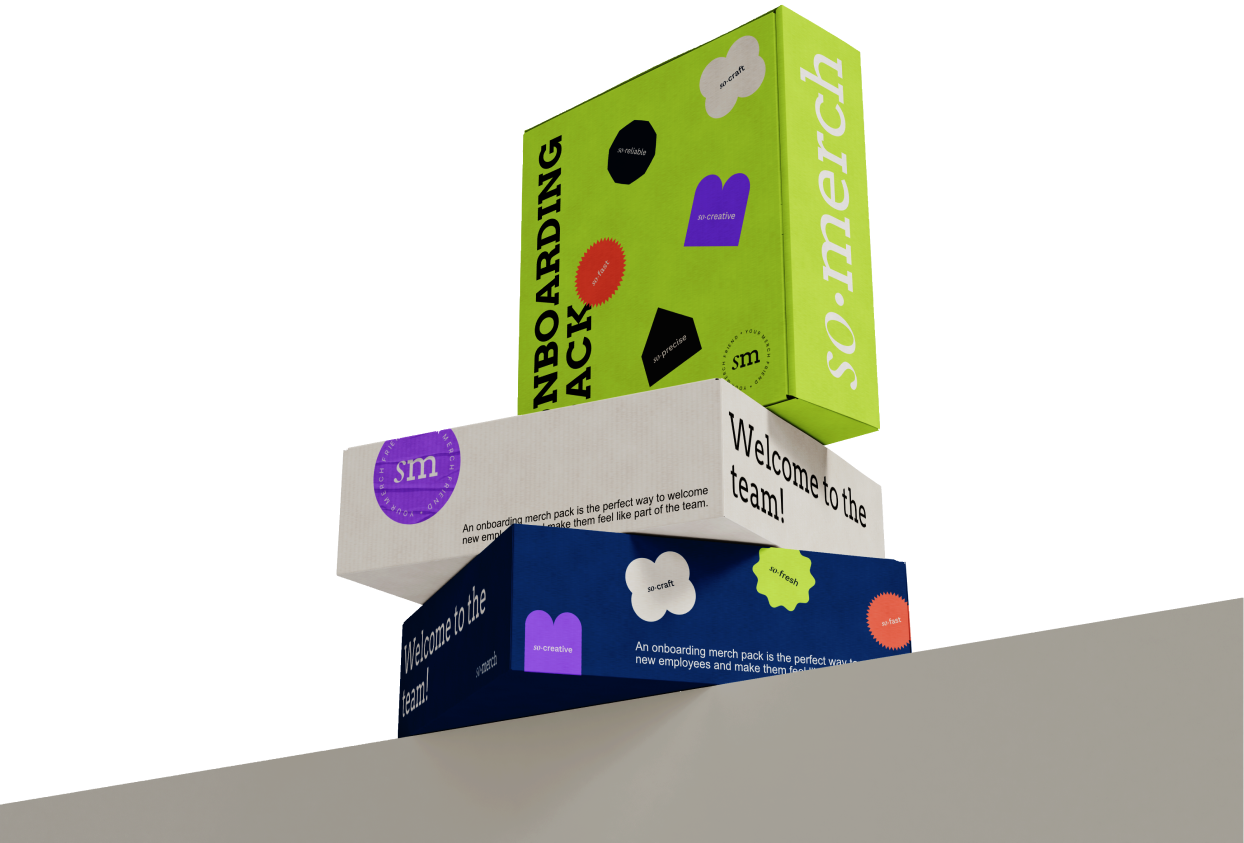
A curated, in-house catalog spanning categories makes it practical to build a pack from genuinely varied items - apparel, drinkware, tech accessories, stationery - rather than whatever one supplier's range happens to carry. Mockups produced the same day mean a pack selection can be sampled and checked against a real range of use cases before a full batch gets committed, catching a mismatch while it's still one sample, not a signed-off standard.
Multi-address shipping across Europe means the same onboarding pack reaches a distributed hire in a different country exactly the way it reaches someone joining the main office, without a separate adjustment worked out by hand each time. For the operational side of onboarding packs - stakeholder sign-off, ongoing fulfilment, what happens when an item goes out of stock - that ground is covered in full in a companion piece on building a repeatable process. This piece is about what belongs in the box; that one is about running it as a program. Both connect back to the broader corporate gifts for employees problem: onboarding packs are usually the first and most visible instance of the same consistency question that shows up across every recurring employee moment.
Closing
Onboarding packs aren't hard to assemble once. They're hard to get right for every new hire who'll ever open one, across roles, climates, and working styles that rarely match the single photo the pack was built around - which is a design problem, not a shopping list, and it's worth treating as one from the first version rather than the third reorder.
Get a quote and visuals within 24 hours
No commitment required. Just clear, practical guidance for your team.