Digital Transfer Printing
Digital transfer (DTF) is SoMerch’s go-to technique for full-color apparel, offering detailed prints, no per-color setup, and reliable results across most common textiles. It works best on flat, non-water-repellent garments, with a 25-piece minimum, an 8-business-day standard lead time, and fast-track production available on selected items.
Intro
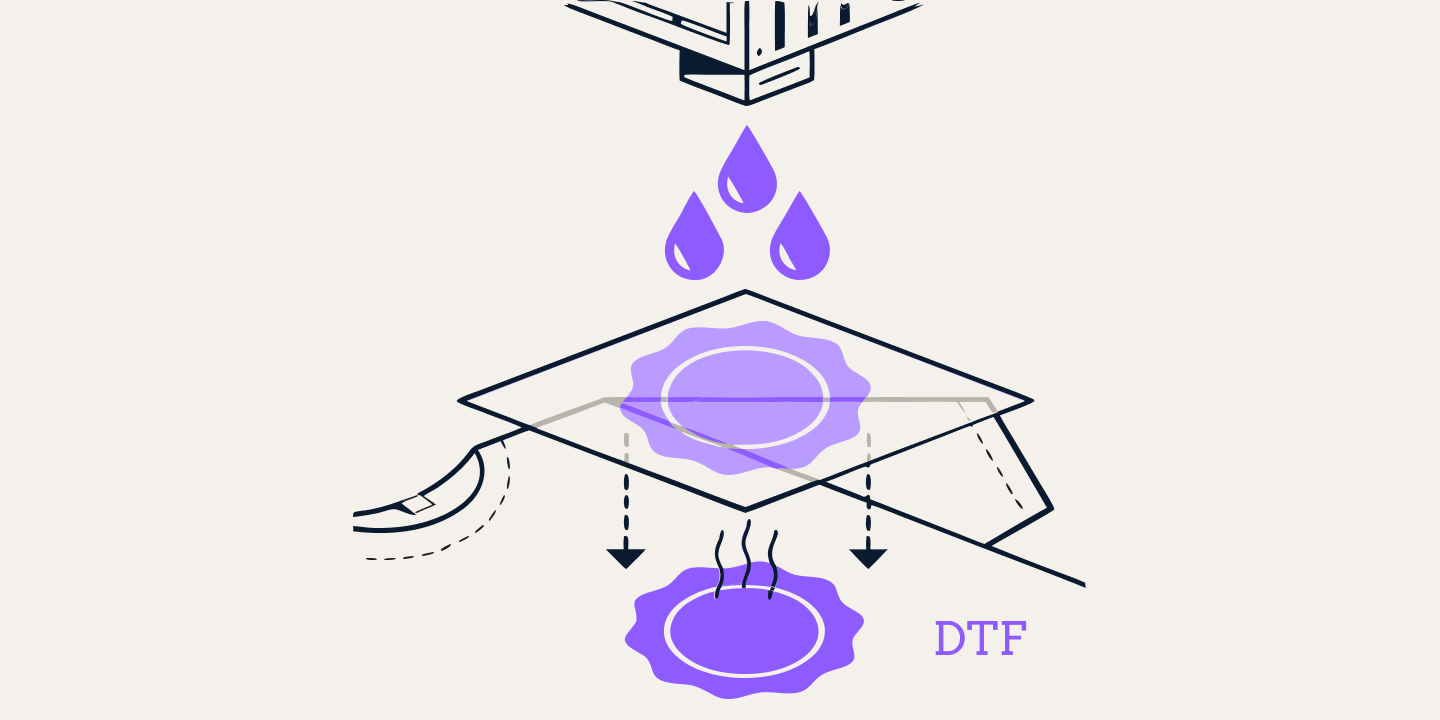
Digital transfer printing - usually called DTF - is how most decorated apparel actually gets made these days. The design prints in full color onto a film, the film carries the artwork onto a layer of adhesive, and heat plus pressure transfers it onto the garment in one pass. It reads as a single print, not a sticker against the fabric.
For SoMerch it is the default full-color technique for apparel, which is why it is the first page in this guide. If you have seen a company t-shirt, hoodie or polo with a colorful logo or detailed artwork, there is a strong chance it was digital transfer.
What digital transfer can do
- Full color, no per-color setup. Because the image prints, then transfers, there is no need to separate the artwork into plates the way older techniques require. Any color, any gradient, photographically detailed at normal viewing distance.
- Works to small quantities. Because there is no setup cost per color, DTF carries the economics down to small runs - this is the technique behind single items and small teams, not just large batches.
- Prints on what you actually wear. It holds on cotton, polyester, blends, and most of the fabrics in the Materials part of this guide.
What it holds on, and where it stops
Digital transfer works on almost any textile - that is its strength. There is exactly one hard stop: anything treated to be water-repellent. Water-repellent finishes sit on top of the fabric, so the print adhesive cannot bond with the fibre underneath, and the design does not survive.
That matters most for outdoor and workwear - jackets, backpacks, performance layers treated with a DWR-style finish. For those items the honest answer is that digital transfer is the wrong tool, and the laser or a printed-and-sewn-in label is often the better route.
Where it genuinely struggles
The limitation people discover after ordering is not the fabric - it is the shape of the item. Photorealistic, edge-to-edge artwork on anything with an irregular form - a backpack with seams and zips, an umbrella, a padded bag - does not print well. A flat transfer needs a flat surface to sit cleanly; curves, gussets and hardware break the image.
This is the part most guides skip, and it is why this page exists. If your item has panels, padding or hardware, the print must be designed around those constraints, or a different technique (UV printing on hard items is the usual alternative) is a better fit.
Lead time and minimum order
- Standard lead time: 8 business days. Enough for a normal production run and quality check.
- 48-hour fast-track is available on selected held-stock items when the deadline is real, not hypothetical.
- Minimum order: 25 pieces. Low enough for a small team or a pilot run, high enough to be worth a production run.
These numbers mean digital transfer is the safest bet when you are ordering a workable quantity of decorated apparel with a normal turnaround - and the fast-track option covers the cases where the calendar did not leave room.
When to choose digital transfer
Choose digital transfer when you want full-color artwork on flat, non-water-repellent apparel - and you want it for a team that is not a five-figure order. It is the default for:
- Single-item gifting and small-team orders where other techniques' setup costs do not justify themselves
- Color-rich or photo-real logos that need no per-color separation
- Apparel drawn in mixed sizes and small quantities per size
For the fabrics it pairs with, see cotton and polyester; for the specific combinations, digital transfer on cotton and digital transfer on polyester cover the two most-ordered cases.
Closing
Digital transfer is the go-to full-color technique for most apparel: no per-color setup, economical at 25 pieces, full CMYK, and compatible with almost every textile except the water-repellent-treated ones. Its only real boundary is the shape of the item - flat artwork on flat garments, and you are in safe hands.