Edge-to-Edge Sublimation
Edge-to-edge sublimation prints full color across the whole surface of a garment or item - no framed print area, no edges to break the design. It works only on polyester-based materials, because the ink becomes gas and bonds into the fibers; white space in the artwork does not print. It is the technique for all-over, photo-real, seam-to-seam designs on sportswear, outerwear and hard synthetic items.
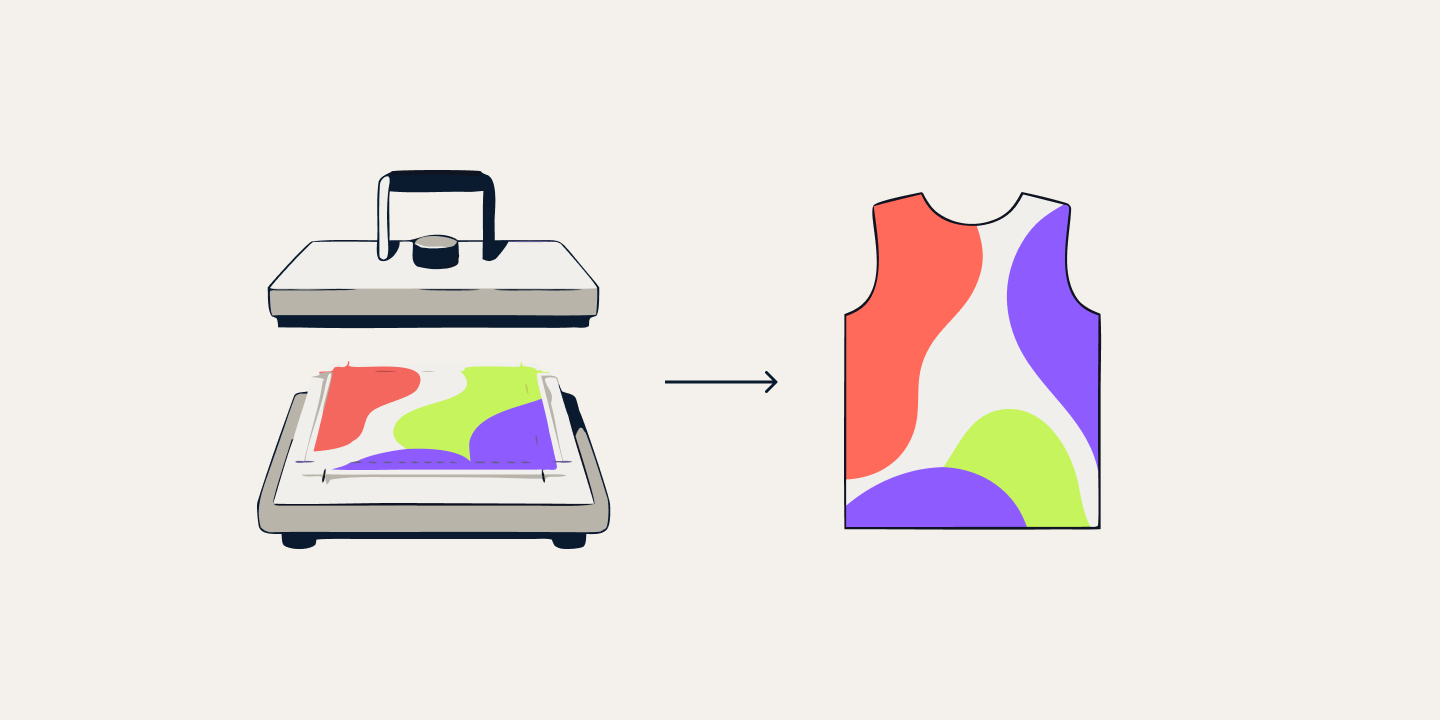
What edge-to-edge sublimation is
Edge-to-edge sublimation is the technique behind the shirts and jackets where the print covers the whole surface - pattern runs over the shoulders, around the front, across the back, no white box around the design. The artwork is printed onto transfer paper, then heat converts the ink into gas that bonds into the polyester fibers themselves. The result is not ink sitting on top of the fabric - it is color inside the fiber, which is why the print feels like it is part of the garment and barely wears.
The two things that define it
- Full color, all over. CMYK printing with no practical area limit - the design can cover the whole item. That is what "edge-to-edge" means: the printed area ends only where the item ends.
- Polyester only, and white does not print. Sublimation bonds into synthetic fibers, so the base fabric must be polyester (or a fabric with enough polyester content to hold the color). And because the ink is translucent gas, white in the artwork simply does not print - it shows the fabric's own color underneath. That is why sublimation designs are built around the garment's base color rather than white backgrounds.
Where it genuinely stops
Not every fabric, not every design. Cotton and natural fibers cannot be sublimated - the ink has nothing to bond to, so the image washes out. If the garment is cotton or a cotton-majority blend, the honest answer is that digital transfer is the full-color route on cotton, not sublimation. And if the design needs a solid white as a real color (white logo on black), sublimation cannot deliver it - the white would simply vanish into the black fabric.
What to send
A vector file for logos and line work, or a raster file at 300 dpi at print size for photo-real designs - the subject matters because sublimation prints large surfaces, and a small image blown up to a full back print will blur. Fine lines down to the sheet can survive in a large all-over design, but keep detail commensurate with the size it will print.
When to choose edge-to-edge sublimation
Choose it when the design should cover the whole item - team sportswear with a full pattern, event wear where the graphic flows over the product, or hard items on the same principle: printed synthetic totes, badges, and items where a framed print would look out of place. For framed single-logo work on apparel, silkscreen and digital transfer are the more economical routes.
Standard production around 8 business days. Note: the 48-hour fast-track does not apply to sublimation - the full-surface process has its own rhythm, so plan the calendar accordingly.
The short version
Edge-to-edge sublimation is full-color printing that runs the whole surface of polyester items - no framed area, no edges, color bonded inside the fiber. It only works where polyester is, and white does not print. For all-over designs it is the exact right tool; for a framed logo on cotton, it is not - that is digital transfer's job.