Welcome Kits: Two Different Moments, One Default Box
Welcome kits get used for two different moments that aren't the same occasion. Here's why treating them as one default box backfires.
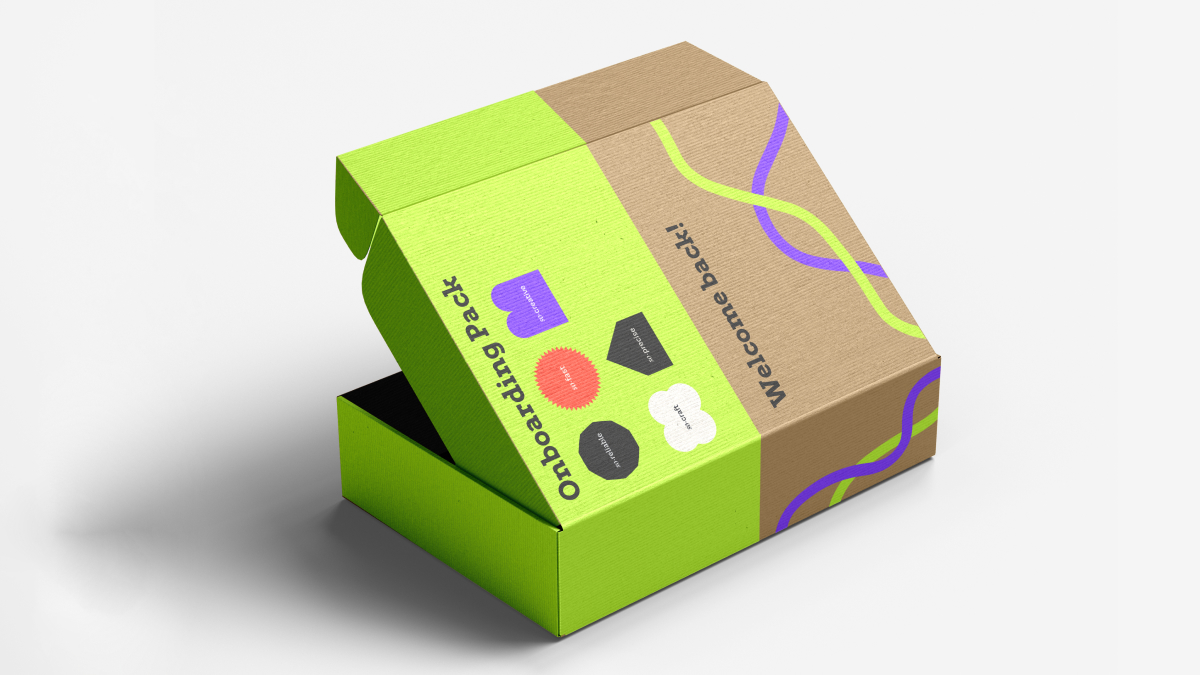
Intro
"Welcome kit" gets used as a catch-all term for two genuinely different moments - a new hire's first day, and an employee coming back after time away. Most companies never notice the difference, because the same welcome kit gets sent either way, built once and reused without much thought about which occasion it's actually meeting.
Two different triggers, one default kit
A new-hire welcome kit is tied to a scheduled, known-well-in-advance start date. HR knows the day, the role, usually the office or working setup, months before anyone opens the box. A returning employee's welcome kit is tied to a much less predictable trigger - the end of parental leave, a sabbatical wrapping up, an extended secondment abroad finishing, a long medical leave concluding. These dates move. Parental leave gets extended by a few weeks. A secondment gets pushed back. A return date that looked fixed on a calendar in January can shift twice by the time it actually arrives.
Most companies never built a separate version of the welcome kit for this second occasion. Whatever the standard kit is - the one designed for new hires - gets sent to a returning employee too, on the assumption that "welcome" is one occasion instead of two.
Where it actually breaks down
A returning employee opens a kit built for someone who has never worked there before. A "getting started" card, a first-day tone in the note, items chosen for a total stranger rather than someone who already knows where the coffee machine is and has a desk full of history with the company. None of it is wrong on its own - it's just aimed at the wrong person.
The timing problem compounds it. A return date shifts - leave gets extended, a secondment end date moves by a few weeks - and nobody re-confirms it before the welcome kit ships. Either it arrives at an empty desk two weeks early, or the trigger gets missed entirely because whoever was tracking it assumed the original date still held.
Take an ordinary case: an employee returns after six months of parental leave to find a welcome kit waiting on their desk. It reads like an onboarding template nobody bothered to edit - the same card, the same tone, the same items given to every new hire that quarter. The intention was kind. The execution missed the actual occasion. The person didn't need an introduction. They needed to be told they were missed and that their return mattered - a genuinely different message than "here's how things work around here."
Why this is an occasion-matching problem, not a generosity problem
Nobody sets out to make a returning colleague feel like a stranger. The instinct to send something is almost always there, and the intention behind it is usually good.
The missing piece is recognizing that welcome kits cover two different emotional registers that get lumped together as one occasion. A new hire needs an introduction - here's the company, here's what we're about, welcome aboard. A returning employee needs recognition - we noticed you were gone, we're glad you're back, nothing about your place here changed while you were away. A single generic kit, built around the first register, can't serve the second one no matter how nice the items inside it are.
The failure isn't visible in the box itself when it's sitting in a warehouse or on a planning spreadsheet. It shows up entirely in how the moment lands for the person receiving it - and by the time that's obvious, the kit has already been opened and the impression already made.
What makes it work
The fix isn't building two entirely unrelated catalogs from scratch. It's one system with a decision point up front: is this an onboarding trigger or a return trigger, and then applying the matching tone and content to whichever one it actually is. The items can overlap - a notebook and a mug are fine in either version - but the framing, the note, and a few of the specific choices need to differ based on which welcome this actually is.
Building in a re-confirmation step specifically for return dates matters more here than almost anywhere else in employee gifting, precisely because return dates move more often than a fixed start date does. A quick check a week or two out - is the return date still the return date - catches the shift before the kit ships to the wrong day. And treating "returning" as its own defined occasion, with its own trigger and its own version of the kit, rather than a variant of onboarding running off the same script, is what actually keeps the two moments from blurring into each other.
How SoMerch fits
Kitting and free warehousing for up to six months mean both a new-hire welcome kit and a returning-employee version can be produced once and held in stock, then released depending on which trigger actually fires - no need to source either one fresh at the moment it's needed. Mockups produced the same day make it straightforward to check the tone difference between the two versions before a full batch gets committed, so the distinction is deliberate rather than assumed.
Multi-address shipping across Europe and release-on-demand from stored stock mean a shifted return date gets handled by adjusting when the kit ships, not by scrambling to re-source anything under time pressure. This is a different problem from the one covered in a companion piece on onboarding packs - that piece is about designing one kit that works for a genuinely wide range of new hires; this one is about not sending that same new-hire kit to someone who isn't new at all. Both connect to the broader corporate gifts for employees problem: a welcome kit sent to the wrong occasion is its own quiet version of the same inconsistency that shows up whenever gifting gets treated as one generic bucket instead of a set of distinct, deliberately planned moments.
Closing
A welcome kit isn't one thing. Getting it right means treating "welcome" and "welcome back" as the two different moments they actually are - one an introduction, the other a recognition - rather than sending one box with two different mailing labels and hoping the gesture lands the same way either time.