Personalised Corporate Gifts: The Risk Is in the Details, Not the Idea
Personalised corporate gifts are easy to imagine and hard to execute correctly at scale. Here's where the risk actually sits, and what removes it.
Intro
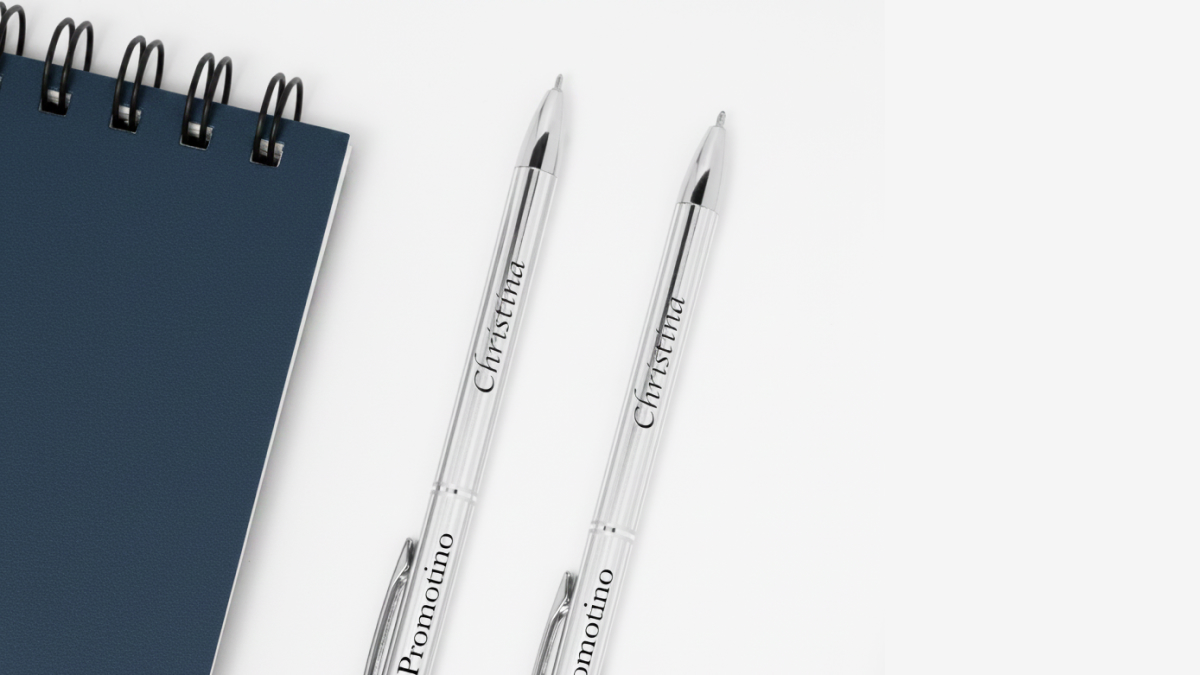
"Personalised" sounds like the easy upgrade to a corporate gift - add a name, a set of initials, a small detail that makes something feel considered rather than generic. The idea itself takes about two minutes to land on. Making sure fifty personalised corporate gifts are each, individually, actually correct is a completely different task, and it's the part that rarely gets planned for with the same care as the idea.
Personalisation is a promise, not a feature
A personalised gift carries an implicit promise that a generic one doesn't: this was made specifically for you, not pulled off a shelf. That promise is exactly what breaks the moment a name is misspelled, the wrong variant goes to the wrong person, or two recipients' items get swapped somewhere between the list and the delivery.
The more personal the gift, the more visible a mistake becomes. A plain, uniform item that arrives slightly off - a color a shade darker than expected - is forgettable. A personalised item that's wrong is memorable, and not for a good reason. It reads as evidence that nobody actually checked, which is the opposite of what personalisation is supposed to signal.
Where it actually breaks down
Corporate gifts for a personalised round usually start as a spreadsheet - names, sizes, variants, sometimes a role title or initials - that has to be transcribed correctly onto a production order without a single row shifting out of place. That transcription step, however it happens, is where most of the actual risk in personalised corporate gifts lives.
A last-minute list change makes it worse. Someone leaves the company, someone new joins, a spelling gets corrected after the list was already "final" - and now the personalization details have to be updated in a way that's more fragile than simply adjusting a headcount. Proofing a personalised batch is also genuinely harder than proofing a uniform one: every item is technically different from every other, so a general "this batch looks good" sign-off doesn't catch a name-level error the way it would catch an obvious color or print defect on a uniform run.
Take a fairly ordinary case: a fifty-person personalised gift round for a year-end recognition program. The concept is simple - initials on a nice item, nothing complicated. But during a last-minute edit to the recipient list, a spreadsheet column shifts by one row, and three people's names get quietly reassigned to the wrong items before anyone catches it. The batch looks fine at a glance. It isn't fine for the three people who open something with someone else's initials on it, and it isn't fine for whoever has to explain what happened and arrange a correction once the mistake surfaces - usually days later, once the affected recipients have already noticed.
Why this is a production-accuracy problem, not a creativity problem
Coming up with the personalization concept itself - a name, initials, a role title, a short message - is rarely the difficult part. Most people responsible for personalised corporate gifts land on a reasonable concept quickly.
What's actually hard is guaranteeing that concept gets applied correctly, item by item, at whatever scale the recipient list requires, without the process quietly degrading as the list gets longer. Risk compounds with scale in a way flat, non-personalized orders simply don't experience. Ten personalised items and two hundred are not the same problem done at a bigger size - they're a different problem, because the number of places a name-level error can slip in grows with every additional recipient on the list.
That scaling risk is specific to personalisation. A uniform order of two hundred identical items either comes out right across the board or has an obvious, catchable defect. Two hundred personalised corporate gifts can be individually flawless in craftsmanship and still fail, one at a time, in a way that only shows up when someone checks a specific name against a specific item.
What actually reduces the risk
The fix isn't checking harder or asking someone to read the list more carefully one more time. It's a process that catches errors structurally, rather than relying on a person's attention holding up across a long list under deadline pressure.
That means one point where the personalization data enters production, not several handoffs where a name list gets copied, re-typed, or reformatted between a spreadsheet, an email, and a production order - each handoff is a chance for a row to shift. And it means a proofing step built for personalised batches specifically: checking that the item corresponding to row three of the list actually says what row three says, not just confirming that the batch looks acceptable in general.
How SoMerch fits
In-house production means the confirmed personalization list goes directly into the print process, without a re-typing handoff to a subcontractor who has to interpret someone else's spreadsheet correctly. Tiered QA with photo proofs means individual personalised items get checked against the actual list before dispatch, not just eyeballed as a uniform-looking batch.
Mockups produced the same day mean the personalization format - name placement, size, style - gets confirmed on a sample before a full list goes into production, catching a formatting issue while it's one item instead of fifty. This connects to the broader corporate gifting problem: for personalised corporate gifts specifically, execution, not the idea, is what actually determines whether a gift round succeeds or turns into an awkward correction after the fact.
Closing
A personalised gift is a promise made at the individual level, not the batch level. The idea behind it is almost never the risk - most people land on a good concept without much trouble. The risk is whether that promise gets kept correctly for every single name on the list, which is a production and process question, not a creative one. Getting that right, consistently, across whatever size the list happens to be, is what separates personalised corporate gifts that land well from ones that quietly turn into an apology email.