Innovative Corporate Gifts: The Effect Only Works Once
Innovative corporate gifts lose their entire value the second time someone sees them. Here's why reordering the same hit item backfires.
Intro
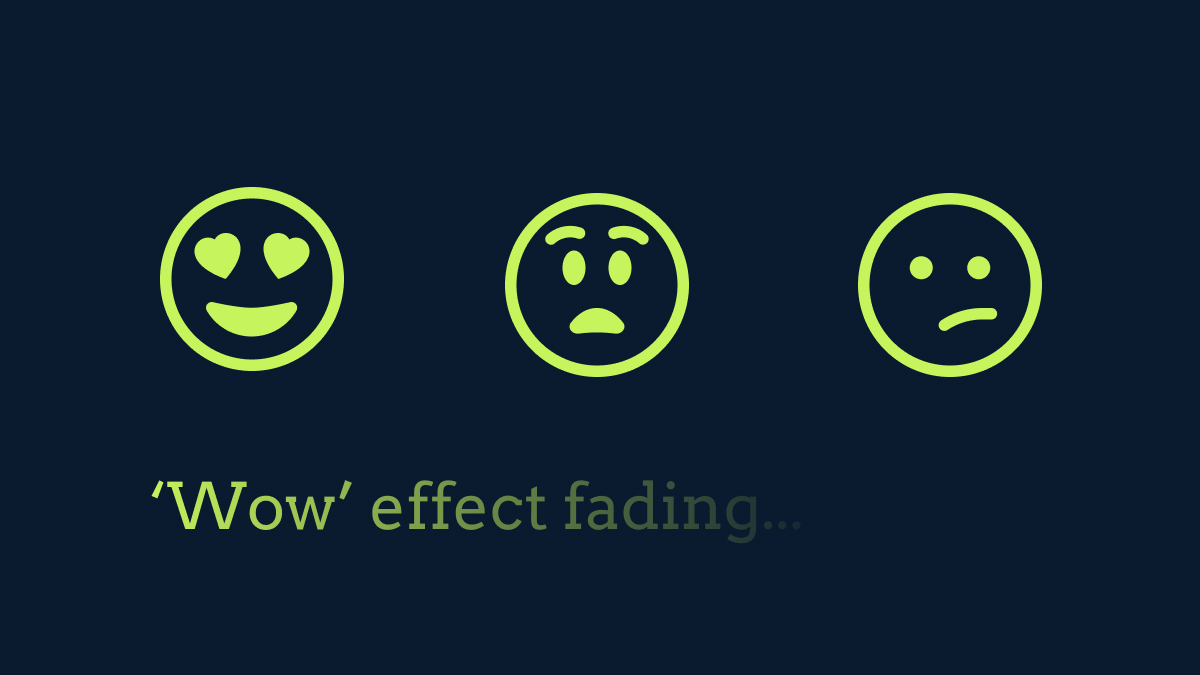
An innovative gift works exactly once per recipient. The first time someone opens a box and finds something they've genuinely never seen before, the reaction is real. The second time - even from the same company, even if the item is objectively just as well made - that reaction doesn't come back. It's not innovative anymore. It's just the thing the company already gave out.
Innovative is a first-encounter effect, not a durable trait
A practical gift keeps its value on reorder. A good notebook is still a good notebook the fifth time it gets handed out, because usefulness doesn't depend on the recipient having never seen a notebook before. A luxury gift works similarly - consistency is actually the point, not a liability.
An innovative gift is built differently. Its entire value comes from novelty specifically - the moment of genuine surprise at encountering something new. That reaction is a one-time event for any given person. Reordering the exact same item for the next round of recipients doesn't reproduce the effect that made it worth choosing in the first place. It just delivers a now-familiar object, minus the one thing that justified calling it innovative.
Where it actually breaks down
A company finds one genuinely innovative item, it lands well with the first group that receives it, and the natural instinct is to make it the new standard for innovative corporate gifts going forward - reorder it for the next round, then the one after that, because it clearly worked the first time.
The trouble is that recipient pools overlap far more than most people plan for. The same office, the same event circuit, the same industry - repetition gets noticed faster than anyone expects, because the people receiving corporate gifts a second time are often exactly the people who'd remember getting the first one.
Take a fairly ordinary case: a company gives a genuinely novel item at one industry conference, and it's a clear hit - people talk about it, some post about it, the booth traffic reflects it. Six months later, the same team brings the identical item to the next event on the same circuit. Several attendees in the room already have one. What read as innovative the first time reads as a repeat the second, and the effort spent getting attention the first time doesn't just fail to repeat - it can actively read as a company that ran out of new ideas.
The broader market catches up too, on a timeline nobody controls from the inside. An item that felt genuinely ahead of the curve when it was first chosen becomes ordinary the moment enough other companies independently land on something similar, which tends to happen faster than most gifting timelines account for.
Why this is a renewal problem, not a sourcing problem
Finding one innovative item usually isn't the hard part. Genuinely novel products exist and are available to source without much difficulty - that was never really the bottleneck.
What's missing is treating "innovative" as a category that needs continuous replenishing, rather than a decision made once and reused indefinitely. Every other positioning covered elsewhere in this series - luxury, practical, eco-friendly - is a trait that survives repetition just fine, or even benefits from it. Innovative corporate gifts are the exception: repetition is the one thing that actively destroys the value this specific category is supposed to deliver.
This is easy to miss because the failure doesn't show up in the item itself. The gift is exactly as well made the second time as the first. Nothing about the physical object changed. What changed is entirely in the recipient's head, and that shift is invisible right up until someone mentions, in passing, that they already have one of these from last year.
What actually keeps a gifting program innovative
The fix isn't reordering the same hit item indefinitely because it worked once. It's rotating in a genuinely new option before repetition catches up with the last one, treating the win as a single data point rather than a permanent solution.
Segmenting the audience matters too - keeping track of which recipients already saw a given item, so a repeat conference circuit or a returning client doesn't get handed the identical thing twice. And treating "what's the innovative pick this round" as a recurring question that gets revisited regularly, rather than an answer settled eighteen months ago and left on autopilot, is what actually keeps the category doing the job it's meant to do.
None of this requires a bigger budget. It requires accepting, going in, that an innovative pick has a shelf life measured in exposures, not years - and planning the next one before the current one runs out.
How SoMerch fits
Smaller batch sizes without losing per-unit efficiency make it genuinely practical to rotate a selection more often, instead of over-committing to one large order built around a single item that will eventually stop feeling new. Mockups produced the same day mean a new candidate item can be checked and confirmed quickly every time the program needs a refresh, rather than treating each refresh as a rare, heavy sourcing project.
A broad, in-house catalog means the next genuinely different option for an innovative corporate gifts program comes from the same relationship already in place, not a fresh vendor search rebuilt from nothing each time. This is a different problem from the one covered in a companion piece on cool corporate gifts - that piece is about taste and audience-relativity; this one is about a first-encounter effect that literally cannot repeat, no matter which audience is receiving it. Both connect back to the broader corporate gifting problem: finding an idea was never really the constraint. Keeping a working supply of fresh ones is.
Closing
An innovative gift works exactly once per person who sees it, and no amount of quality in the item itself changes that math the second time around. The fix isn't finding the one perfect innovative item and reusing it. It's treating "innovative" as a rotation that needs regular attention, not a decision made once and repeated forever.