A Better Way to Handle Employee Gifts Without Chasing Details
Employee gifts rarely fail on the idea. They fail on the sizes, addresses, and approvals nobody had ready. Here's the actual fix.
Intro
Employee gifts rarely fail because of the idea. The hoodie is fine. The mug is fine. What actually eats the time - and what makes the whole thing feel harder than it should - is the admin sitting underneath the idea: getting a current size, chasing down an address, getting someone to sign off before an order can even go in. Whoever ends up running employee gifts spends more time on those three things than on deciding what to send.
The occasions are different, the admin underneath them is the same
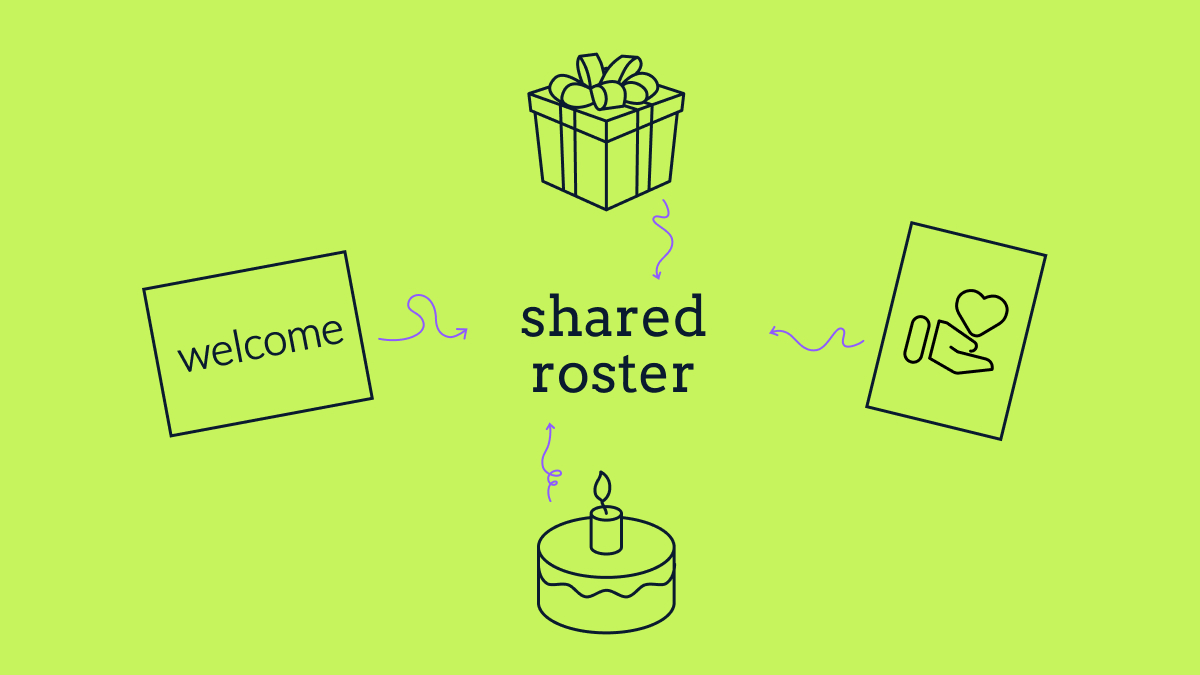
Onboarding, a thank-you for a specific effort, a welcome-back after extended leave, a holiday round - each of these is a genuinely different occasion, with its own timing and its own tone. They shouldn't be flattened into one generic "employee gift" decision, because they aren't one thing.
But underneath every one of those different occasions sits the exact same three-part admin load: a size, an address, an approval. Most companies solve each occasion as a separate project, which quietly means solving the same admin problem from scratch every single time one of them comes around - four occasions a year, four separate rounds of collecting the same information about mostly the same people.
Where it actually breaks down
Sizes get collected fresh for every round because nobody keeps a roster that's actually current. Someone sends a form for onboarding, gets responses, uses them once, and the list disappears into an old email thread by the time the next occasion needs the same information.
Addresses get chased the same way - individually, over email or a chat message, once per gifting round, because no single person owns a standing, up-to-date list of who's where. And approval routes shift depending on whoever happens to be running that particular round of employee gifts: one person routes it through a manager for sign-off, the next person just places the order and hopes nobody asks questions afterward.
Take an ordinary case: the same twelve people on a team get asked for their size and address four separate times over the course of a year - once for onboarding, once for a thank-you, once for the holiday round, once for a welcome-back gift. Nothing from the first request got saved anywhere the next person handling employee gifts could find it, so the same twelve people answer the same two questions four times, and whoever's running the process starts from zero every time.
It gets worse when the person running employee gifts changes partway through the year, which happens more often than anyone plans for - a role gets reassigned, someone goes on leave themselves, a new hire in HR inherits "gifting" as one line on a much longer list. Whatever the outgoing person knew about sizes, addresses, and who approves what usually leaves with them, because none of it lived anywhere but their own inbox and memory.
Why this is a shared-infrastructure problem, not a per-occasion problem
Each occasion genuinely deserves its own decision about what to send and when to send it - that part shouldn't get templated away, because an onboarding pack and a thank-you gift are solving different problems and should look different from each other.
What shouldn't be rebuilt every time is the data underneath all of it: who's who, what size they wear, what address reaches them, who needs to approve the order before it goes out. Treating that information as reusable infrastructure - collected once, kept current, available whenever the next occasion for employee gifts comes up - is a completely different problem than deciding what any single gift should actually be. Most companies never separate the two, which is why every occasion feels like starting over.
What a better process actually looks like
A better process for employee gifts keeps one place where sizes and addresses live and get refreshed periodically - a quick check-in once or twice a year, not a fresh request every time an occasion fires. It also means a standing, pre-agreed approval path for each type of gifting, decided once, calmly, rather than negotiated under time pressure each round.
Each occasion still gets planned on its own terms - onboarding still needs its own selection, a thank-you still needs its own timing, a welcome-back still needs its own tone. None of that changes. What changes is that none of those decisions has to start by rebuilding a roster that already existed the last time employee gifts went out.
How SoMerch fits
A single shareable view with pricing, timeline, and mockups means the current roster and approval status for employee gifts live in one place both sides can check, instead of scattered across old email threads and half-remembered replies. Multi-address shipping across Europe means the same saved address list works whether a given round covers one office or people spread across five countries, without a separate lookup for each recipient.
Kitting and free warehousing for up to six months mean the physical gift for any occasion is ready and waiting well before the trigger date arrives - so at the actual moment an occasion comes up, the only thing left to chase is confirming the details are still current, not sourcing anything from a standing start. For the deeper thinking behind each specific occasion, see the pieces on the underlying consistency problem, on onboarding packs, on thank-you gifts, and on welcome kits - this piece is about the shared admin underneath all four, not a replacement for any of them.
Closing
The idea for an employee gift is almost never the hard part. The hard part is the same three pieces of admin - a size, an address, an approval - redone from zero every single time an occasion comes up. That's exactly the part that doesn't need to be redone at all, and fixing it once is what actually makes every occasion after the first one easier than the last.