Corporate Gadget Gifts: It Either Works or It Doesn't
Corporate gadget gifts fail differently than any other gift - functionally, not just aesthetically. Here's what to check before committing.
Intro
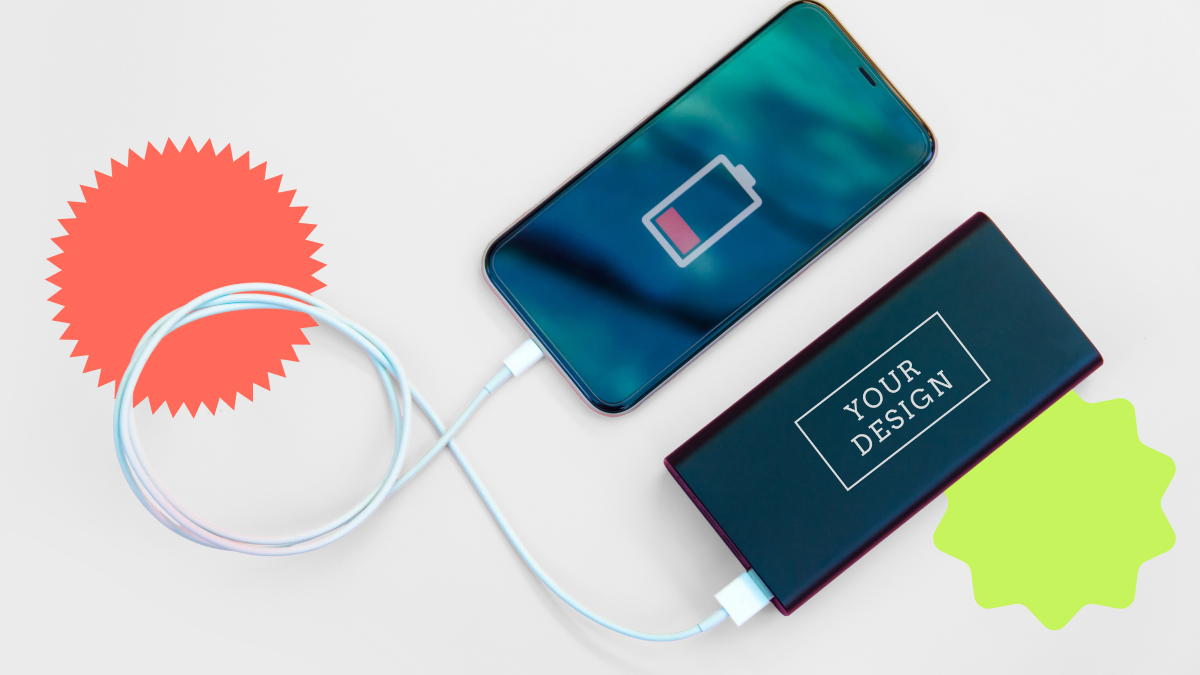
A plain mug still holds coffee. A middling tote bag still carries things. Corporate gadget gifts don't get that same margin for error - a power bank that's just okay might not turn on at all, a charger might not fit anything the recipient actually owns, a cable might stop working after a couple of uses. And unlike most gift disappointments, which dawn slowly over weeks of a drawer never getting opened, a broken gadget gets noticed immediately, the first time someone tries to use it.
Gadget gifts fail differently than every other kind of gift
Most items in a corporate gifting range have some tolerance for being merely fine. A mediocre notebook still holds notes. An unremarkable water bottle still holds water. The item does its job even when nobody's especially excited about it.
Corporate gadget gifts don't come with that same tolerance. A power bank that doesn't hold a full charge, a wireless charger that doesn't recognize a current phone, a cable that frays after light use - these aren't disappointing in the abstract, aesthetic way a plain design is disappointing. They're functional failures, and the recipient discovers them the moment they try to use the thing, not months later while cleaning out a drawer.
Where it actually breaks down
Quality variance in tech accessories isn't just a cosmetic concern the way it might be for a printed notebook cover. It's functional - whether the charge output is what it claims to be, whether the cable holds up to daily use, whether the item genuinely works the way the product listing said it would.
Device standards also move quickly. A charging connector that fit most phones in a given year doesn't necessarily fit as many two years later, and a gadget gift chosen without checking current compatibility risks landing as a nice-looking item that a meaningful share of recipients simply can't use with what they actually own.
Then there's the logo-placement constraint, which tends to surface later than it should. Print surfaces on tech accessories are smaller and more limited than on fabric or paper goods - often suited only to a clean, single-color mark rather than the full multi-color logo that works fine on a hoodie or a notebook cover. A design built without that constraint in mind usually needs rethinking specifically for this category, and that rethink often happens at the mockup stage, later than it should.
The compatibility problem compounds the print constraint rather than sitting apart from it. A charger or cable also has to physically work with what recipients actually carry, and a design decision made without checking either the print surface or the current device standards tends to surface both problems at once, at the worst possible stage to fix either one cheaply.
Take a fairly ordinary case: a company picks a sleek-looking wireless charger for a client gift round, confident in the choice because the product photo looked sharp. The mockup comes back and the logo is barely legible on the compact surface - the design that worked everywhere else in the gifting program doesn't translate to this particular item. By the time anyone notices, the timeline for the round is already tight, and there's no comfortable runway left to simplify the design and re-approve it.
Why this is a functional-verification problem, not a taste problem
Picking a gadget that looks appealing is genuinely easy. Most tech accessories photograph well, and a product page full of clean renders makes almost anything look like a reasonable choice.
The piece most companies skip with corporate gadget gifts is confirming, on an actual sample, that the item works as intended and that the logo genuinely fits the surface it's being printed on - before a full batch gets committed at quantity. Every other gift category covered in this series carries some risk of landing as underwhelming. Corporate gadget gifts carry a sharper risk: not working at all, which is a different order of problem and worth taking seriously before a quantity gets locked in.
What makes gadget gifts work
The fix starts with testing the actual function on a physical sample rather than approving a photo or a spec sheet - confirming charge output, checking build quality, verifying the item does what it claims before hundreds of units get produced around it.
Designing specifically for the print surface, instead of dropping the general company logo file onto a gadget unchanged, avoids the late-stage scramble to simplify a mark that was never built for a small, constrained space. And favoring common, current compatibility standards over whatever looks most impressive in a render means the gift actually works for the widest possible share of recipients, not just the ones with the newest devices.
None of this needs to slow the process down if it happens at the right point. Confirming function and print fit on a sample before full production adds a few days, at most, to a timeline that would otherwise absorb a much bigger delay later - a reorder, a design revision under pressure, or a batch of corporate gadget gifts nobody can actually use.
How SoMerch fits
Mockups produced the same day mean the print-surface constraint on corporate gadget gifts shows up early, while there's still comfortable time to simplify a design rather than discovering the problem after a batch is already committed. Tiered quality checks with photo proofs before dispatch catch a functional issue - a wrong connector, a build defect, a mark that didn't transfer cleanly - before it reaches every recipient on a list, not after a complaint comes back from one of them.
Because production happens in-house, the customization method gets matched to what each specific product's surface can actually deliver, rather than a single template applied uniformly across an entire range regardless of the item. This connects to the broader corporate gifting problem covered elsewhere: the idea for a gift was never really the hard part. For gadget gifts specifically, verifying it actually works is.
Closing
A gadget gift either works or it doesn't, and the recipient finds out immediately, not eventually. That's worth confirming with an actual sample before the full order goes in - not after two hundred units have already shipped and the first complaint arrives.