


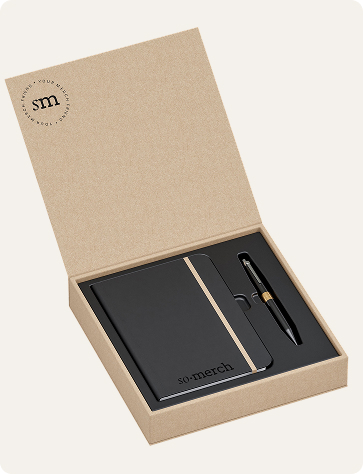


Make sales and marketing more memorable with merch
Use custom products to support campaigns, events, launches, and outreach with physical touchpoints people remember.
79% of people are more likely to do business after promotional product.

are more likely to do business with a brand after receiving a promotional product.https://www.ppai.org/media-hub/built-for-life/
say they have looked up a brand after receiving a promotional product.https://www.ppai.org/media-hub/built-for-life/
of recipients worldwide recall the advertiser on a promotional product.https://www.prnewswire.com/news-releases/asi-surveys-25-000-consumers-to-prove-promos-power--effectiveness-301822772.html
Ways to use merch in sales and marketing

Brand visibility

Campaign support


Lead generation

Sales outreach
How sales and marketing merch comes together


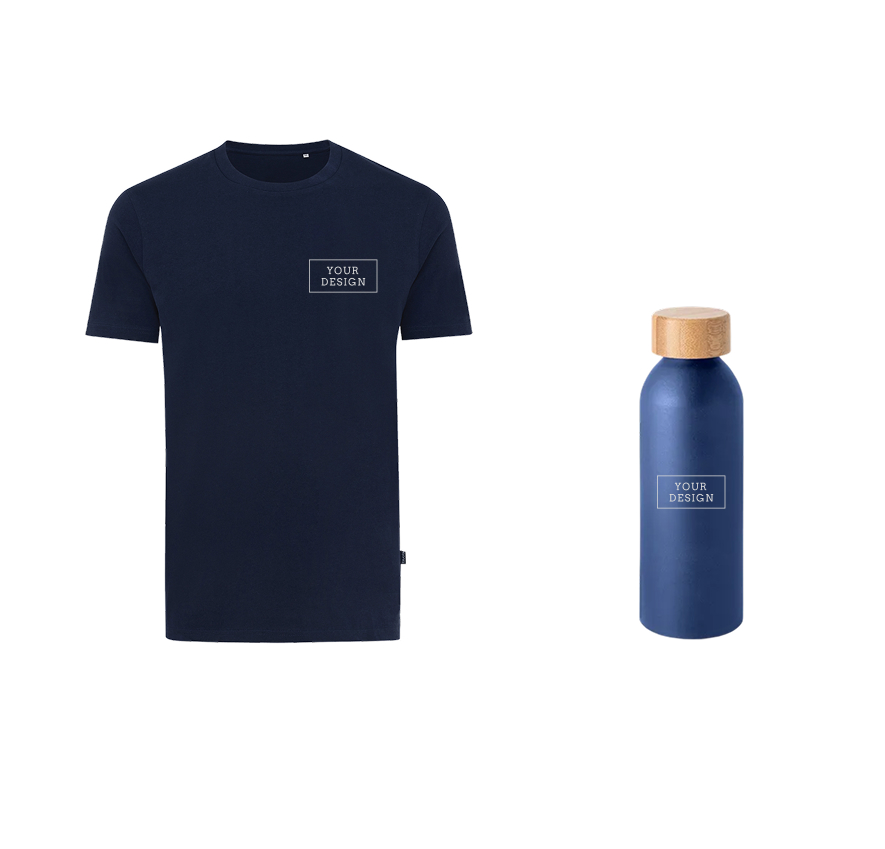
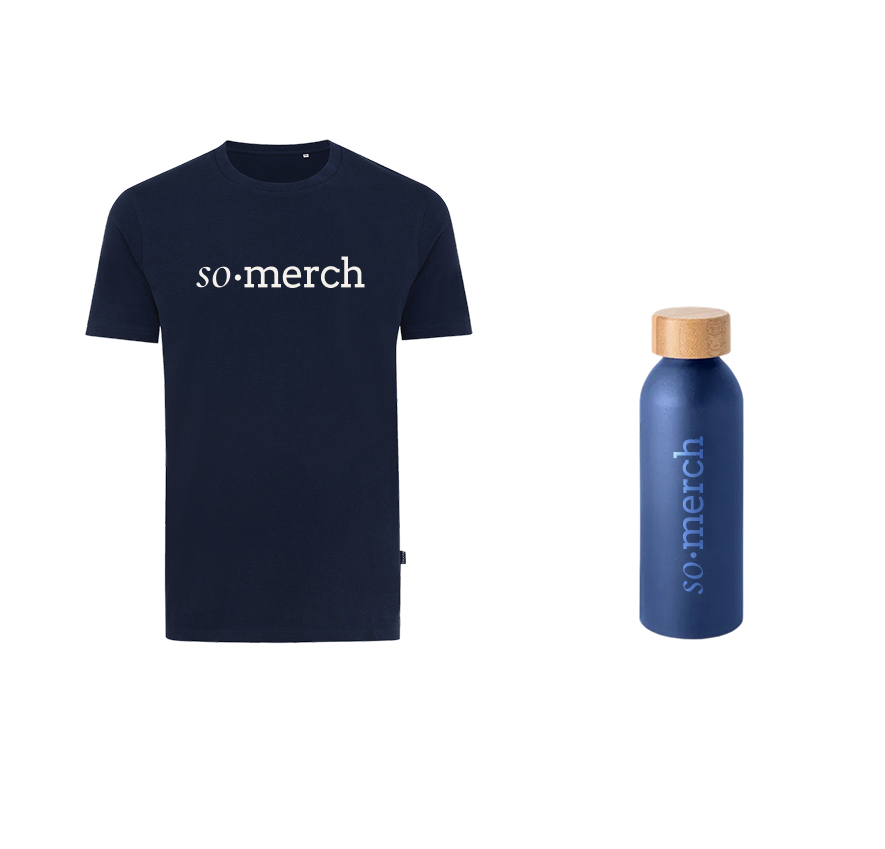
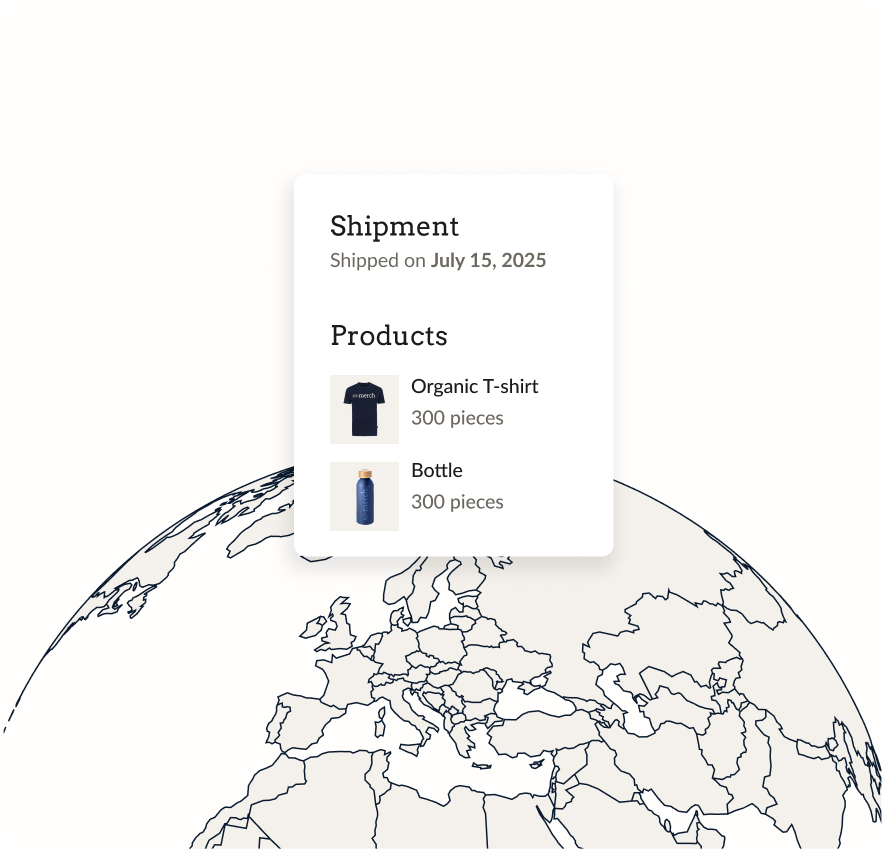
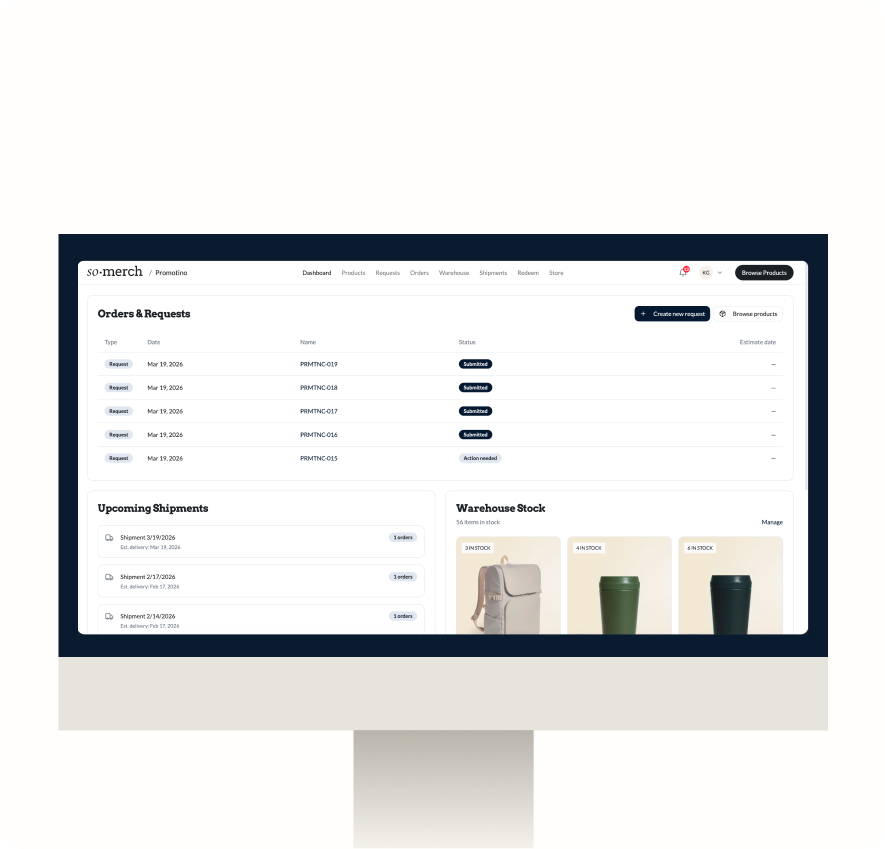
Products ready to store and ship
PERFECT GIFT

Event essentials
Keep event-ready merch in stock and ship what you need to offices, venues, or team members without last-minute coordination.
PERFECT GIFT

Branded apparel
Hold team apparel in stock and ship it when needed to offices, events, or individual employees.
PERFECT GIFT

Drinkware
Store practical everyday merch that is easy to fulfil across recurring requests, gifting, and employee distribution.
Why So Merch?

Built for branded consistency

Reliable quality at every step

Easier to manage over time
From ad hoc merch to smarter activation

Before
- Merch is ordered reactively for one-off needs
- Product choices do not clearly support the campaign or audience
- Teams spend time coordinating multiple suppliers and timelines
- Items arrive late, feel generic, or vary in quality
- The brand touchpoint is easily forgotten after the interaction
After
- Merch is selected with a clear campaign or sales objective
- Products feel more aligned with the audience and message
- Ordering becomes easier to manage across teams and markets
- Delivery is more predictable and better timed to the activity
- The brand stays visible beyond the first touchpoint
Frequently Asked Questions
What is marketing merch and how do B2B companies use it?
Marketing merch is the physical objects B2B companies send to prospects, clients, and event attendees as part of a sales or marketing program. Unlike one-off corporate gifts, marketing merch is typically repeatable and program-driven - used in ABM campaigns, trade shows, outbound sales touches, and customer lifecycle moments. The goal is brand recall and relationship warmth, not transaction.
Done well, marketing merch creates small, repeated touchpoints that travel with a prospect through their buying cycle. Done badly, it ends up in a drawer. The strongest programs treat merch as an extension of positioning - restrained, specific to the audience, and timed to moments that matter (first demo, contract signing, anniversary).
How is merchandise used in B2B sales cycles?
In B2B sales cycles, merchandise typically shows up at three moments: as an outreach opener to break into cold accounts, as a thank-you after a meaningful meeting or demo, and as a closing gift when a deal is signed. The goal varies - opener merch needs to earn attention, thank-you merch signals care, and closing merch cements the relationship.
The common failure mode is using the same merch at every stage, which turns thoughtful touches into background noise. The stronger approach uses different items tied to different moments: a compact item for the opener, a higher-quality item for the thank-you, a more personal item for the close.
What's the ROI of sending merch to sales prospects?
Using merch in outreach tends to lift response rates when targeted well - specific accounts, personalized context, and a clear follow-up. Results vary widely by industry and execution, so treating merch as a 5-10% uplift over baseline cold outreach is a reasonable planning assumption, not a guarantee. Volume-blast merch programs typically underperform more targeted ones.
Measuring ROI cleanly requires tracking: did the merch recipient book a meeting, respond to the follow-up, or move further in the pipeline than non-merch contacts? Without that attribution, ROI becomes anecdote. Most strong programs measure response lift on a 30-60 day window and iterate from there.
What merch works for account-based marketing (ABM)?
ABM merch works best when it reflects account-specific research rather than generic swag. A gift tied to something you know about the target account - their industry, a recent milestone, a specific pain point - lands harder than a logo-forward item sent to everyone on the list. Quality matters more than novelty; a quality notebook with a thoughtful note beats a gimmick every time.
Operationally, ABM programs are lower volume and higher per-recipient spend than broader sales merch. That means the logistics lean on single-recipient shipping rather than bulk distribution, which SoMerch handles through the warehouse-and-ship model: one order, held ready, shipped per target account as campaigns hit.
What's the difference between sales merch and event swag?
Sales merch is single-recipient or targeted - sent to specific prospects, clients, or accounts with context. Event swag is broad-distribution - handed out to every attendee at a conference, trade show, or company event. Sales merch typically carries higher per-unit spend and quieter design; event swag is higher volume, more logo-forward, and designed to scan from across a room.
Most B2B programs run both. Event swag builds top-of-funnel awareness during a few days of the year; sales merch deepens specific relationships continuously. The two programs can share a product catalog but the budget allocation and design choices differ: event swag optimizes for cost-per-impression, sales merch for cost-per-conversion.
When should we send merch to prospects vs. existing clients?
Send merch to prospects at moments that earn a response - after a meaningful discovery call, in advance of a decision-maker meeting, or at the close of a successful evaluation. Send merch to existing clients at moments that signal care - contract renewal, team expansion, a milestone on their side, or an end-of-year thank-you. Avoid sending to either group as blanket volume outreach.
The calendar matters as much as the gift. A gift that arrives at the right moment is remembered; the same gift arriving at a random point becomes forgotten swag. Tie sends to specific events in the prospect or client lifecycle rather than a monthly cadence.
Can SoMerch send single-recipient sales gifts to prospect addresses?
Yes. SoMerch ships single-recipient gifts to any EU address - home, office, or prospect-provided - from stock held in our warehouse. The typical ABM or sales flow looks like: produce the gift in bulk once, warehouse with SoMerch, then ship individual gifts as sales moments hit. Ship time is one business day from your trigger plus 2-6 business days of EU delivery.
For single-recipient programs, the minimum order of 20 units applies to production, not shipping. You produce 20 upfront, then ship one at a time as prospects enter the campaign. The 20 units cover a quarter or more of ABM targets for most teams.
Can we trigger merch sends from our CRM (HubSpot, Salesforce)?
Not today. SoMerch doesn't offer direct CRM integration with HubSpot, Salesforce, or other platforms. Send triggers are handled manually through the SoMerch platform - your team submits the recipient's address and any context, and we ship within one business day. Direct CRM integration is on the roadmap but not yet live.
For teams running at high sales volume, the manual trigger adds a minute or two per send, which adds up for programs sending hundreds of gifts a month. For most programs at typical ABM volume (20-50 sends a quarter), manual submission doesn't create meaningful friction. If CRM integration is a hard requirement for your program, flag it with our team - it's useful signal for the roadmap.
How fast can SoMerch ship a one-off sales gift to a prospect?
Speed depends on whether the gift is already warehoused with SoMerch. From stock, a one-off sales gift ships one business day after your trigger plus 2-6 business days of EU delivery - a prospect receives it in under a week. Without stock, production takes 8 business days and the 20-unit minimum applies, so true single-unit on-demand isn't supported.
The practical setup for sales programs: produce 20 units up front, warehouse them with SoMerch, and ship one at a time as prospects enter the campaign. The end-user experience is effectively 'one-off' even though production happened in a batch. For brand-new items where 20 feels like too many, the corporate gifts model with a wider product catalog is usually the better fit.
Can sales merch include a handwritten note or personalized message?
Not today. SoMerch doesn't offer handwritten or per-recipient printed notes inside sales merch shipments. Each sales gift currently ships with a standard company insert - same message across every recipient. Per-recipient variable notes, whether handwritten or printed, are on the roadmap but not yet live.
The workaround most sales teams use is a two-step flow: ship the gift with a standard company insert, then follow up with a personal email or LinkedIn message that references the gift. Many prospects actually prefer this because the personal note lands better when it doesn't look automated.
Can we co-brand merch with a target client's logo for ABM gifting?
Yes, if two conditions are met: you have written authorization to use the target client's logo, and you can commit to the minimum order quantity of 20 units with that specific design. For single-account ABM programs where 20 gifts is realistic (multiple stakeholders at the target account), adding the client's logo works. For one-account-one-contact sends, the MOQ usually makes it impractical.
Most ABM teams address the MOQ by using the client logo across multiple stakeholders at the target account - the VP, their team, and the broader account all receive the same item. A client-logo item sitting on 10 desks at the target account creates more internal conversation than one gift to one person.
What's a good budget for a sales gift per prospect?
Calibrate sales gift budget to deal value and pipeline stage. A low-intent cold opener sits at €10-25 per recipient. A mid-funnel gift after a demo or positive evaluation sits at €30-75. A closing gift on a signed contract sits at €75-200 for high-value deals. The gift shouldn't feel cheap, but it shouldn't read as a transaction cost either.
A useful planning heuristic: spend no more than 0.5-1% of the potential deal value on a single prospect-facing touch. That keeps the economics sensible while leaving room for a considered item. For recurring-revenue models, calculate against expected year-one contract value, not lifetime value.
How do I measure whether sales merch is working?
Measure sales merch against a baseline: response rate, meeting conversion, and pipeline progression for recipients vs. a similar non-merch cohort over a 30-60 day window. Track in your CRM or outbound tool with a flag (merch-sent vs. no-merch) and compare. If the merch cohort moves further, the program works; if not, targeting or the item needs adjustment.
The common measurement mistake is tracking response directly to the merch event (did they reply about the gift?) rather than pipeline outcomes (did they book a meeting in the following month?). Prospects rarely mention the gift directly even when it worked; the outcome shows up in their willingness to take the next meeting.
Do you track delivery and signature for sales gifts?
Yes. Every SoMerch shipment includes tracking that shows when a sales gift left the warehouse, when it's in transit, and when it's delivered. Signature confirmation is available on request for higher-value gifts where proof-of-receipt matters. The tracking data is per-shipment, so you can see exactly when each prospect received their gift.
This matters for timing follow-up outreach. Sending a LinkedIn or email touch the same day the gift arrives typically lifts response rate compared to random-timing follow-up. The tracking data can feed into a sales sequencing tool if you want to automate the follow-up trigger.
Can SoMerch handle recurring marketing merch programs (campaigns, drops)?
Recurring merch programs work manually today at SoMerch - your team triggers each campaign or drop, and we produce and ship from the warehoused stock. Automated recurring programs, where the platform launches campaigns on its own schedule, are on the roadmap but not yet live. For most marketing teams, the manual trigger adds little friction because campaigns are planned months in advance.
The current flow handles recurring programs well: produce a quarter's worth of stock up front, warehouse with SoMerch, then submit drop-by-drop ship requests as each campaign hits. This gives full control over timing and messaging without needing automation. If automated scheduling is important to your team, let us know - it's useful signal for the roadmap.
What sales merch works for tech / SaaS companies vs. traditional B2B?
Tech and SaaS companies tend to favor merch that reflects developer or product culture - quality apparel, well-designed stickers, quirky tech accessories, and limited-run drops. Traditional B2B (manufacturing, financial services, logistics) tends to favor more conservative merch - quality drinkware, premium stationery, classic apparel. Both categories succeed with quality over quantity; the aesthetic signals are what differ.
The easiest read is the prospect's existing brand voice. If their website is minimal and product-forward, your merch should match the tone; if it's corporate and restrained, the merch should reflect that. A tech-native hoodie sent to a traditional B2B prospect can land awkwardly; a formal-feeling leather goods gift to a startup can feel corporate in a bad way.
Can we send merch to prospects across multiple EU countries from one order?
Yes. A single SoMerch order can ship to prospects across any EU country, routed from one warehouse to each destination. The flow is identical to a multi-office program: produce the merch once, warehouse the stock, then trigger per-recipient shipments as prospects enter the campaign. EU delivery takes 2-6 business days depending on the destination country.
For multi-country ABM or sales campaigns, this means you don't need a regional warehouse setup or a local vendor per country. One production run, one stock pool, EU-wide distribution. For prospects outside the EU, the gift can ship to an EU-based team contact and be forwarded from there - international shipping from SoMerch is on the roadmap but not yet live.
Can SoMerch help us run a customer gifting program tied to renewals?
Renewal-tied gifting works manually today at SoMerch - your team triggers the send when a renewal moment approaches, and we ship from warehoused stock within one business day. Automated renewal triggers, where the platform fires a gift send based on a renewal date or CRM event, are on the roadmap but not yet live.
Most customer success teams running renewal programs at typical B2B volume find the manual trigger workable because renewal dates are predictable and scheduled. The setup that works now: build an internal calendar reminder tied to each customer's renewal month, and submit the ship request 2-3 weeks before the renewal conversation. If automated scheduling is a must-have, flag it with our team.
Can SoMerch help us build a merch store for our marketing campaigns?
Not today. SoMerch currently supports campaign merch through a managed flow - your team picks the products, we warehouse and ship on your trigger. A self-serve customer-facing merch store, where campaign recipients or prospects log in and order from a curated catalog, is on the roadmap but not yet live.
The workaround that works today for campaign merch is the managed model: build the campaign merch pack, produce and warehouse with SoMerch, then ship as the campaign qualifies recipients. It reaches the same end state as a self-serve store with a different front door. If a true customer-facing portal is important to your campaign, flag it with our team.
Should B2B companies send merch unsolicited or after first contact?
Unsolicited merch sends can work but carry a higher waste rate - many recipients either don't recognize the sender or treat the gift as spam. Post-contact sends (after a discovery call, demo, or first meaningful touch) perform more consistently because the recipient already has context. If budget is constrained, the post-contact send is almost always the better investment.
The exception is well-targeted ABM programs where the merch opener is specifically designed to earn a first meeting. These can outperform email-only outreach, but only when the targeting, the gift, and the follow-up are all crafted together. Blanket unsolicited sends to a long prospect list rarely clear the bar.
Get started today
Browse our products, submit a quote and get free designs and a price quote in 24 hours.


